









The short version
- A laundry system for a family of five works best as one load a day if your schedule is predictable, or two to three set days per week if it isn’t.
- One basket per person, kept in their bedroom, handles sorting before clothes ever reach the machine. Towels and sports gear need their own bin, separate from the bedrooms.
- Keep all unmatched socks in one dedicated spot and pair them on one fixed day each week. Anything unmatched after two rounds gets tossed.
- Folding and putting away are two separate steps. Assign each to a different person or time slot, or clean clothes will live in the dryer.
The question isn’t whether your laundry system looks organized. It’s whether it still runs in February, when school uniforms come home muddy and someone’s soccer gear smells like a gym locker. A laundry system for a family of five has to survive real weeks, not just the first optimistic one when everyone still remembers their role.
I’ve run this household through two full approaches: six months of one load a day, then a batch Saturday for another stretch. Five people is above the national average household size, based on Census Bureau household data, which means the laundry advice written for a smaller family often leaves out the uniform that has to be clean by 7 a.m. Neither approach is magic. Here is what held up and what didn’t.
One Load a Day vs. Batch Day: Which Laundry System Wins
One load a day sounds like the obvious answer. You start a load before the school run, move it to the dryer after lunch, fold before dinner. The problem is that this requires you to remember all three steps, every day, without a single sick day, early dismissal, or week where everything goes sideways at once.
A one load a day laundry routine works if at least one adult has a predictable daily schedule. Miss one day and you have two loads tomorrow. Miss two days and you’re staring at the pile again. The American Time Use Survey from the Bureau of Labor Statistics counts laundering within household activities, which a large share of adults engage in on any given day. The load that doesn’t get moved on Tuesday is still there on Wednesday, plus everything that came off a body overnight.
A weekly batch day works better if most adults in the house are gone during the week. The tradeoff is that Saturday disappears. I ran batch Saturdays for four months. The laundry got done. Saturday did not. For many households, two or three set laundry days per week sits between both extremes and survives longer than either one.
The Basket Setup That Reduces Sorting
Each person’s dirty clothes stay in a basket in their own bedroom. When you do a load, you pick up the basket, run it, and return it empty. You never stand over a mixed pile trying to figure out whose shirt that is, or whether the small gray athletic sock belongs to a ten-year-old or a grown adult.
A family laundry basket system built this way does the sorting before anything reaches the machine. Where it gets complicated is towels, bedding, and sports gear. These don’t belong to one person. I keep a separate bin in the hallway for towels and one near the back door for sports gear. That is seven containers total for a house of five, which sounds like a lot until you realize it replaced a weekly sorting session that took twenty minutes and still ended with a gym shirt nobody could find.
The baskets work best when they stay in the bedrooms, not in the laundry room. If the basket travels to the machine, it has to travel back. If it’s already in the bedroom, clean clothes land where they’re going to live anyway. That matters more than it sounds when you’re trying to figure out how to organize kids’ laundry without a whiteboard and a color-coded chart.
🦸♀️ Supermom Advice
Put a small hook or bin on the back of each kid’s door for clothes they’ll wear again before washing. Sweatshirts and jeans that aren’t dirty yet pile up on bedroom floors because there’s nowhere obvious to put them. A single hook removes that floor pile without adding another wash cycle to the week.
The Sock Problem: A Rule That Does Not Require More Bins
Socks go missing because they’re small and because they don’t travel through the laundry the same way the rest of the clothes do. The usual advice is to buy mesh bags, more bins, or a matching color per child. Those help at the margins. The rule that helps more is simpler: one dedicated sock basket in the laundry room and a matching session on one specific day each week.
Unmatched socks go into the basket immediately when they come out of the dryer. On Saturday mornings, the basket comes to the couch. Everyone takes their pile, matches what matches, and pairs get put away right then. Anything left after two rounds is probably a lost cause. It gets donated or tossed. The basket stays small. The floor stays clear.
I bought identical socks in two colors: white for the kids, gray for the adults. It didn’t eliminate the problem, but matching time dropped to almost nothing. This is not a tested protocol. It’s what a large share of household management writers agree on: when every sock looks alike, sorting is barely a step.
What Actually Survives Past Week Two of Any Laundry System
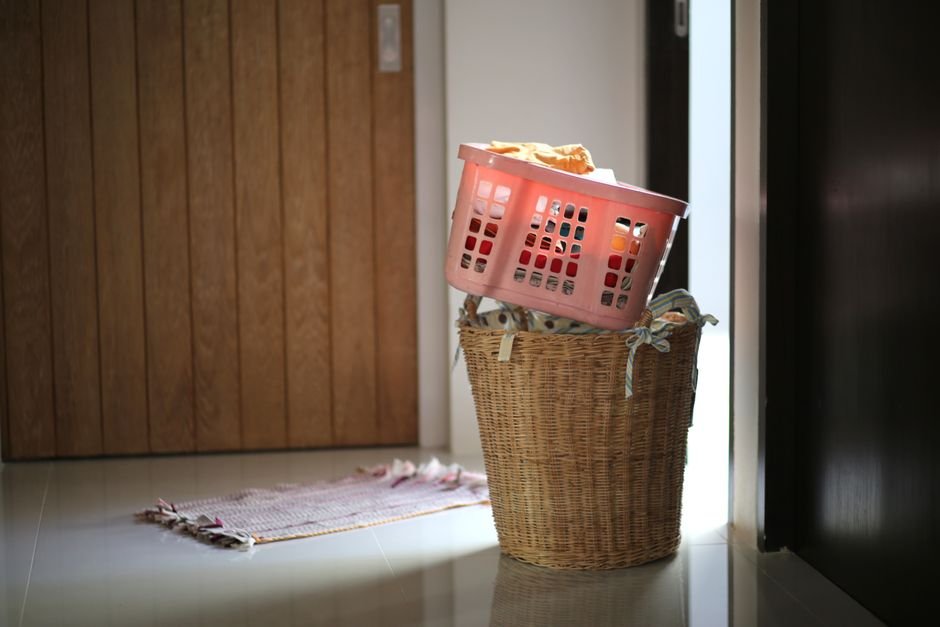
By day ten, the printed schedule on the fridge is usually gone. The rotating responsibility chart lasts a bit longer. What still runs at week two is almost always the simpler version of the original plan, with fewer moving parts and no chart.
What survives is fewer decisions per step, not more organization. One rule per step: start the load before 9 a.m., move it when the alarm goes off, fold it before the next load starts. Pew Research found in 2015 that in households with two working parents, one adult still handles a disproportionate share of daily household management. A system that depends on everyone remembering their role every day breaks the moment one person forgets.
The two-week stress test is simple: run your system for two weeks without explaining it again, reminding anyone, or catching the dropped balls yourself. What still happens on its own is the system. What you had to chase is not a system. It’s a plan that hasn’t been tested yet.
The Laundry Jobs Kids Can Own
The mistake is treating laundry as one job when it’s actually four: washing, drying, folding, and putting away. Kids can take over parts of this earlier than most people expect. Assigning the right step to the right age is how to keep up with laundry with kids without doing all of it yourself. Getting sorted clothes from the dryer to a bedroom is not too much to ask of a seven-year-old.
Laundry steps sorted by age
- Ages 4 to 6: put dirty clothes in their own basket, bring the basket to the laundry room when asked
- Ages 7 to 9: sort clean clothes into piles by person, carry their pile back to their room
- Ages 10 to 12: fold their own clothes, match and put away their socks on the designated day
- Ages 13 and up: run a load start to finish, including putting it away before the next load starts
Folding and putting away are two separate tasks, not one vague instruction. When they merge, neither gets done completely. Clothes get folded and left on the bed, which is one step from getting shoved under it. Assign them separately, with a clear endpoint for each one, and say out loud what done looks like: “clothes in the drawer, not on the bed.”
How to Know If Your Laundry System Is Working
A working laundry system leaves no clean clothes sitting in the dryer overnight and no dirty pile visible outside a basket. That is the whole test. If you’re folding clothes from last Tuesday while starting a new load, the system has a gap. The gap is almost always at the folding-and-putting-away step, not the washing step.
If the system breaks at the same point two weeks running, that point needs a different rule, not more effort. Laundering is one of many recurring household tasks tracked within daily household activities by the BLS time use survey. Recurring means there is a chance each week to fix a small habit at the specific step that keeps breaking, instead of rebuilding the whole thing from scratch.
Permission to skip the elaborate version: if your household manages on two or three loads a week in one session, that’s a system. It doesn’t need baskets or a rotation chart. Set a ten-minute Sunday reset, move anything still in the dryer, check that every basket is back in its room, and put away whatever landed on a bed. The only real requirement is that clean clothes reach the right room before anyone runs out of them.
Five people, two full approaches, and more weeks of real use than I care to count: the system that still runs in February is always simpler than the one planned in September. One basket per person, one clear rule for each step, and one fixed time each week to deal with the socks covers more ground than any color-coded chart. Start there, leave it alone for two weeks, and adjust only the part that actually breaks.
Questions moms actually ask
- What is the easiest laundry system for a family of five?
- One basket per person in each bedroom, a separate bin for towels and sports gear, and a consistent schedule for which category gets washed on which day. The simpler the structure, the longer it holds. Most systems collapse under their own complexity before week three.
- How often should a family of five do laundry?
- More often than a smaller household, once you count clothes, towels, and bedding as separate loads rather than one pile. Spreading those loads across three or four days each week is a common rhythm. Running everything in a single weekly batch is possible but tends to swallow most of a morning.
- Does one load of laundry a day really save time?
- It trades a long batch session for daily attention. When your schedule is consistent, that trade works well. When the week goes sideways, missed days stack into a mini-batch anyway, so the daily approach only wins if you can protect the habit on most days of the week.
- Are individual laundry baskets worth it for kids?
- They tend to pay off once kids are old enough to carry a basket to the laundry room and back without help, which is roughly age seven or eight. Before that, baskets still keep rooms tidier, but the time-saving benefit is mostly for the adult running the actual loads.
- What is the best way to handle unmatched socks?
- One container for all unmatched socks, one fixed day to work through the pile, and a two-round cutoff after which anything still unmatched gets discarded. Buying the same sock style in a single color per person means future matching takes almost no thought at all.