Birthday Party Inflation: Why Kid Parties Feel Like Weddings
Hands full? Listen instead.
5 min listen
The short version
- Birthday party inflation follows the same escalation pattern as weddings: the visible standard moves up each cycle, and families get pulled along whether they meant to be or not.
- Kids tend to remember who showed up, what activity they did, and the cake. Not the color palette, the themed favors, or whether the balloons were custom-printed.
- A party your child will actually remember needs one clear activity, the people they wanted there, and food. Everything else is optional.
- If the planning is making you anxious before the party even starts, it probably got bigger than it needed to.
The invitation said “casual get-together,” and then the photos went up: a balloon garland, a grazing table, coordinated cups, and a banner that matched the tablecloth that matched the birthday girl’s dress. Birthday party inflation didn’t send a memo. It just showed up in the group chat one spring, and now here we all are.
My daughter’s first party was a picnic blanket, six kids from daycare, and a cake from the grocery store. By her third birthday I had a color scheme and a Pinterest board. When you see enough party photos, the internal floor for “a decent party” moves without you noticing.
The kid party-to-small-wedding pipeline
Planning a child’s birthday party and planning a small wedding now require nearly the same checklist: venue deposit, invitation design, a photographer, favors that coordinate with the tablecloth, and a theme palette that runs from the banner to the cups. If you swapped “first birthday” for “rehearsal dinner,” you’d recognize all of it.
Business Insider reported in 2020 that some parents were spending as much as $50,000 on a child’s birthday party. The piece covered specifically wealthy families doing elaborately staged events. But extremes set the visible ceiling, and when enough of those parties circulate on social media, the reference point for “a reasonable celebration” shifts downward for everyone below that level.
A vendor economy grew up around this shift: balloon stylists, party planners, custom cookie bakers, favor assemblers. These are real businesses offering real services, and the issue isn’t that they exist. It’s that their presence makes the unassisted backyard party feel like a gap to fill rather than the default it used to be.
Where the birthday-party escalation comes from
Birthday parties weren’t always a production. According to research in Frontiers in Psychology published in 2019, by 1900 birthday celebrations had become common enough in American households that women’s magazines no longer needed to publish basic guidance on hosting them. They were an ordinary household custom, not an event category requiring a planning timeline.
According to University of Minnesota birthday research published in 2026, birthday parties in the United States were started by wealthy Protestant parents in the 1830s and gradually spread to the wider population over the following century. The same research notes that by the 1920s, children had more input into their own parties, which became smaller, more friend-oriented, and more informal. The long historical arc moved toward the kid’s preferences, not toward adult performance.
Then it reversed. A vendor economy, a photo-sharing culture, and a comparison loop sent things in the opposite direction. The birthday party now sits at the intersection of private family ritual and public social display, and the planning pressure comes from both directions at once.
Why nobody wants the pressure and everybody keeps doing it
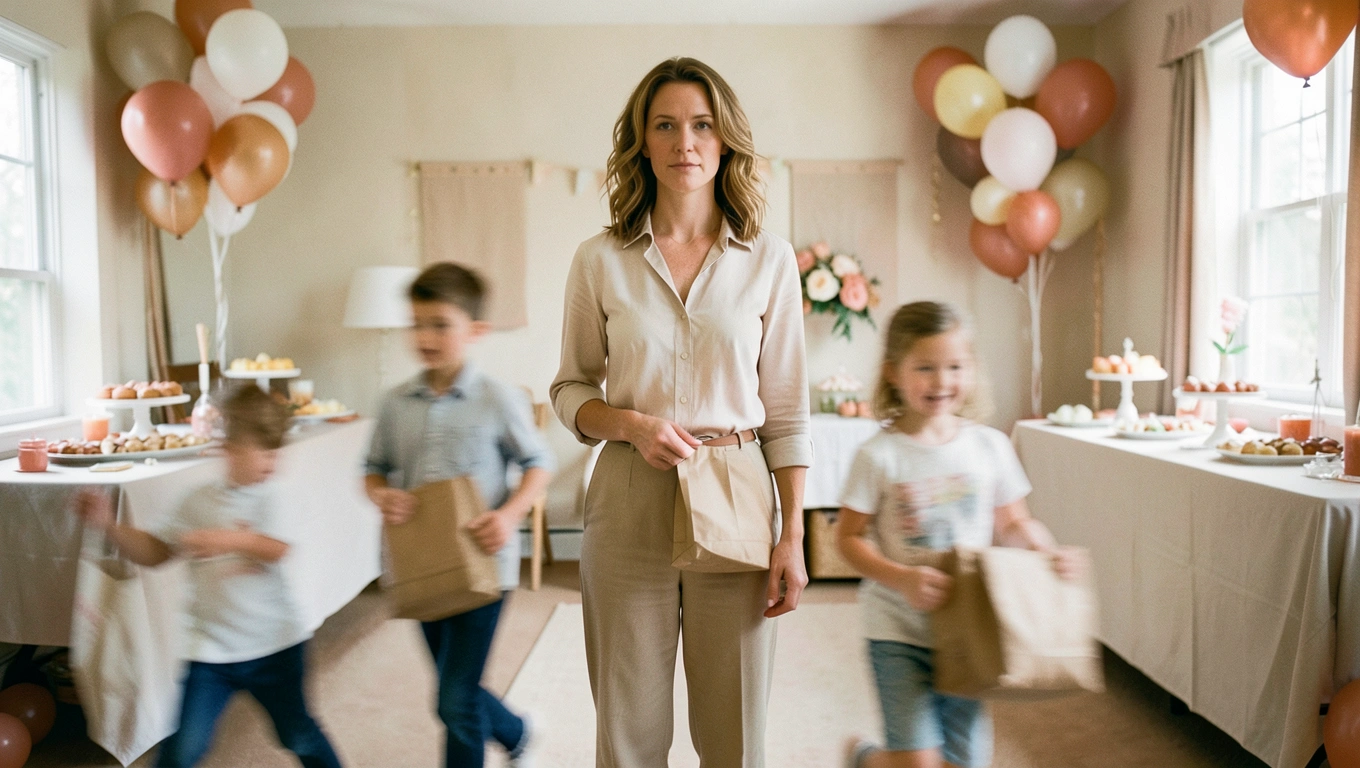
Ask any group of parents whether they enjoy the birthday party escalation. Almost nobody raises a hand. And then spring comes and someone books the trampoline park, and everyone else follows, because the alternative is explaining to your six-year-old why her party was different.
The short answer is a coordination problem. When a few families in a grade set a visible standard, the ones who do something simpler start to feel the gap, not because anyone says anything outright, but because the photos go up and everyone sees them.
Pew Research on modern families documents how much of contemporary family life gets narrated and displayed publicly. The birthday party sits squarely at that intersection: a genuine family ritual and a visible signal about how much effort you put in. Those two things get tangled up fast, and the result is that saying “we’re keeping it small this year” is surprisingly hard to feel settled about.
The other piece is that the pressure rarely feels like competition with other parents. It feels like not wanting to let your kid down. Those produce the same planning spiral, but they feel like different motivations, which makes them harder to push back against.
🦸♀️ Supermom Advice
Ask your kid what they want before you open Pinterest or look at any party photos. Kids usually say something like “I want to swim and have Zoe and Marcus come over.” That’s your starting point, and it’s a lot harder to drift into a balloon arch from there.
What kids are likely to remember instead
Kids tend to remember specific and concrete things, not production quality. According to the AAP guidance on family relationships, shared time, connection, and predictable family rituals are the foundations of a child’s sense of belonging, not the aesthetic coherence of the celebration.
What children tend to hold onto is who was there, what activity they got to do, what the cake tasted like, and whether the adults seemed present or visibly stressed. A five-year-old at the park with her four closest friends, running around and eating grocery store cake, is not going to feel shortchanged because there was no custom banner.
A party where the grown-ups were clearly relaxed tends to leave a better feeling than one where everything looked perfect and everyone was exhausted. This isn’t a verdict on the elaborate parties you’ve already thrown. The point is that the floor for a party your kid will actually remember is lower than the current market rate suggests.
A birthday party reset: spend on the experience, not the performance
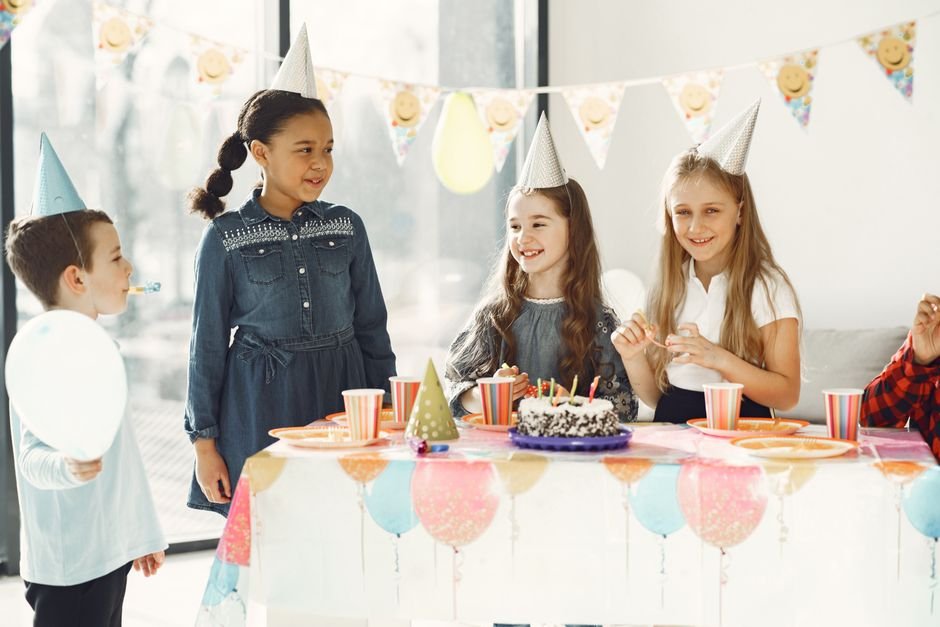
The reset that works is building from your kid backward instead of from the visible standard forward. What do they actually want to do, and who do they want there? Start there, and add things only if the specific kid will notice.
For kids under six, the answer is usually some version of: a few friends, something physical to do, and cake. For kids six and older, a theme can help, but the theme can live on the cake and one decoration rather than a full venue setup. The list of things you can skip is longer than the list of things that matter.
- One activity the kid asked for, not the most impressive option available.
- A guest list that fits your space and your budget, not the full class roster.
- A cake the birthday kid picked, not the one that photographs best.
- Goody bags: skip them, or put some candy in a paper bag and call it done.
- Start on time and end before kids get tired. Two hours is usually enough.
The goal is a party your kid can describe to their teacher on Monday morning. Not one that required a vendor deposit and a week of planning messages.
Questions moms actually ask
What is the average cost of a kids birthday party?
There’s no single reliable national figure. Survey estimates that circulate tend to come from limited samples of parents with young children, not broad federal spending data. What families spend varies widely by region, guest count, and whether the party is at home or at a rented venue.
Why do birthday parties feel like small weddings now?
The checklist is nearly identical: venue deposit, invitation design, coordinated favors, a theme palette from the banner down to the cups. A vendor economy and a photo-sharing culture grew up around it, and the backyard party started to feel like a gap to fill rather than just the default.
Do kids actually care about expensive themes and goodie bags?
Most don’t, and most can’t name what was in the bag two weeks later. The theme and the decorations get processed and largely forgotten. What tends to stay with kids from birthday celebrations is the people, the food, and what they got to do, not the styling.
How do parents set a party budget without feeling guilty?
Frame it around the kid’s actual requests, not the market rate. What one activity did they ask for? Who do they specifically want there? A budget built around those two answers tends to feel intentional rather than like you cut corners, because you built toward something real.