








Hands full? Listen instead.
6 min listen
The short version
- A toy rotation system for kids keeps a small working set of toys out and stores the rest. Kids often play better with fewer options in front of them.
- The maybe box holds items you’re not sure about for four to six weeks. Write the date on it. If nobody asks for anything inside, it goes.
- For kids under five, quietly removing obvious castoffs is fine. Kids six and up do better when they get a real say in what stays.
- Keep floor space open and favorites accessible. No specific toy count is required for any developmental milestone.
The playroom looks like a clearance bin after a wind event. Toys everywhere, most of them untouched, while your kid drags the same two things around the house anyway. A toy rotation system is not a minimalism project. It’s just a way to make the floor navigable and get old toys to feel new again.
This isn’t about hitting a perfect number or making anyone cry over a Happy Meal toy. It’s about keeping what gets used, moving out what doesn’t, and not staging a full family intervention every time you want to clear some floor space.
The toy rotation setup that actually fits in a closet
A toy rotation means keeping a small working set of toys accessible and storing everything else somewhere out of sight. A shelf, two bins in a closet, or a tote in the garage all work. I started with two plastic bins on a closet shelf, and that’s still the whole setup.
Swap what’s out every two to four weeks, or sooner if the current set has gone completely stale. The AAP guidance on how play supports development generally describes open-ended toys, things like blocks, figures, simple puzzles, and art supplies, as doing the most work across different ages. Those are worth keeping in the rotation longest.
A common practical starting point is to keep a handful of items in the accessible set at once, enough to offer variety without filling every inch of floor. The battery-operated thing that makes noise for forty seconds and then gets abandoned is a strong candidate for the maybe pile.
What to keep, quietly remove, and put in the maybe box
The clearest decisions usually sort themselves. Some toys don’t need a conversation because nobody’s going to notice they’re gone.
What you can skip without asking
- Toys with broken or missing parts that make them unusable
- Duplicates when one is clearly preferred and the other never gets touched
- Items the child has visibly aged out of (the shape sorter when she’s seven, the toddler barn when he’s nine)
- Anything with an open recall. The CPSC recall database is searchable by brand and product type.
The maybe box is for everything in between. Grab a cardboard box or a bin, write the date on it, and put the uncertain stuff inside. If nobody asks for anything in it over the next four to six weeks, the box goes without further discussion. That’s the whole system for a maybe box for kids’ toys.
That’s not sneaky. It’s not making a big thing out of something that doesn’t have to be one. I’ve had boxes sit untouched for two months without a single question about anything inside.
How much choice to give at each age
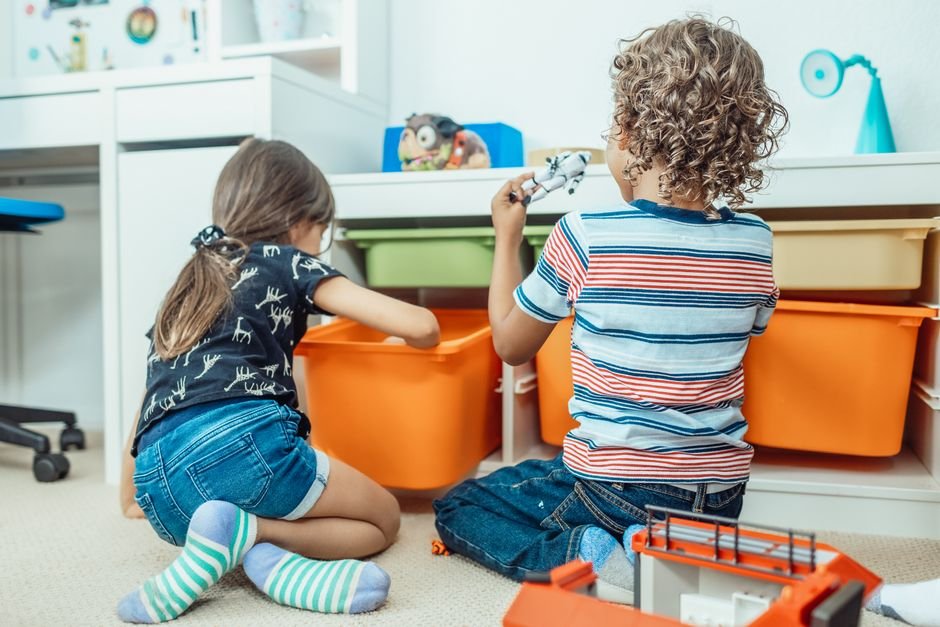
How to declutter toys without a fight often comes down to knowing when to involve your kid and when to just handle it yourself. Getting this wrong in either direction is easy.
For kids under three, do it quietly. They don’t track what they own and they won’t miss what isn’t in front of them. The AAP’s guidance on how two-year-olds build play generally describes this age as developing through sorting, stacking, and simple cause-and-effect play. They’re not cataloging their inventory.
For preschoolers, three to five, offer a small concrete choice. Hold up two toys and ask which one comes back out of storage with them. Try something like “This one or that one, the blocks or the figures?” It’s a small decision, and it’s enough.
For early elementary, six to eight, a quick sorting session works. Three piles: keep out, put away, not sure. Let them make the calls on obvious favorites, and put the ambiguous stuff straight into the maybe box.
For kids nine and up, involve them for real. They notice what’s missing and they remember. I made the mistake once of moving a Lego set my son hadn’t touched in six months, and he asked about it three days later. Walk through the room together. Ask what they’d actually be upset to lose. That’s what stays.
🦸♀️ Supermom Advice
Before the next rotation, spend two minutes checking the maybe box from the last round. If a child asked about anything in it, write that toy’s name on a sticky note and put it inside the new box. When the six weeks are up, you have a quick reference instead of a memory test.
How Much Say Does Your Child Get?
What your toy rotation setup actually needs to work
The goal isn’t a specific toy count. It’s open floor space and accessible favorites.
The AAP guidance on what to look for in a toy generally suggests that no single toy is required for a child to reach any developmental milestone. What matters is whether the toys available match where the child is developmentally and give room for imagination and interaction. A set of blocks, a few figures, some art supplies, and one or two current favorites covers a wide range.
The AAP’s guidance generally identifies traditional hands-on toys like puzzles, blocks, books, and simple games as supporting language, problem-solving, and physical activity across a wide age range. When one of those keeps coming back out rotation after rotation with nobody growing tired of it, that is the clearest signal it belongs in the permanent accessible set rather than cycling through storage.
A common signal that the rotation needs adjusting isn’t the toy count. It’s whether the room can get back to baseline in about ten minutes. If it can’t, the working set is too big or the wrong things are out.
Donating safely without passing along broken or recalled toys
A toy goes out the door only when it’s complete, clean, and safe to pass along.
Before anything hits the donation bag, check for broken pieces, sharp edges, and missing parts. The AAP guidance on toy age labels and safety generally describes age ratings as reflecting physical safety, not just developmental fit. A toy rated for three and up contains small parts that are genuinely dangerous for a younger child. If you’re donating to a family with a toddler, that label matters.
Also check the CPSC recall database before the bag leaves the house. Donating toys children have outgrown is straightforward once the broken and recalled items are already sorted out first.
How the maybe box fits into your toy rotation
Set a phone reminder when you close each maybe box. Six weeks out, nothing more specific than that. When it goes off, open the box, return anything a child specifically asked about, and let the rest go.
Once a year, before the holiday gifts arrive or at the start of summer, pull out the storage bins and do a full pass. Anything that’s been rotated in and out more than twice with nobody asking for it goes directly to the donation pile, without going back through the maybe box first.
The toy rotation system doesn’t need a labeled wall or a weekend project. It needs one working set out, one box moving toward the door, and a way to decide without overthinking it.
Questions moms actually ask
- How often should I rotate my child’s toys?
- Every two to four weeks is a common range, but there’s no fixed schedule. If your child is still engaged with what’s out, leave it alone. The right time is when she’s pulling everything apart looking for something better, not a date on the calendar.
- Should I declutter toys when my child is at school or let them choose?
- For kids under five, while they’re out is easier and doesn’t create conflict from nothing. For kids six and up, bringing them in keeps things smoother. A ten-year-old who discovers her things vanished without warning tends to remember that for a while.
- How long should a toy stay in the maybe box?
- Four to six weeks is enough time to know whether anyone misses what’s in there. Write the date on the box so the cutoff is set from day one. If nothing’s been requested by then, those items weren’t part of active play.
- What is a reasonable number of toys for a child?
- There’s no target number. The AAP guidance generally suggests that developmental fit matters more than quantity. A practical rule is whatever fits in the accessible space with open floor left over. When the floor disappears under toys, the rotation needs adjusting.
- How do toy needs change from toddlerhood through age 12?
- Toddlers build through sorting, stacking, and cause-and-effect play. Preschoolers extend that into imaginative sequences with figures and props. By early elementary, games, art supplies, and building sets take over, and by middle childhood what stays shifts more by specific interest than by category.