First Week of Kindergarten: What’s Not on the Supply List
Hands full? Listen instead.
5 min listen
The short version
- The after-school meltdown is decompression, not defiance. Snack first, questions later.
- Label the things that actually go missing: jacket, lunchbox, water bottle. Skip the crayons.
- Car line has unwritten rules. Ask another parent before you need to figure it out alone.
- Replace “how was your day” with one specific question. “What made you laugh today” gets you an actual answer.
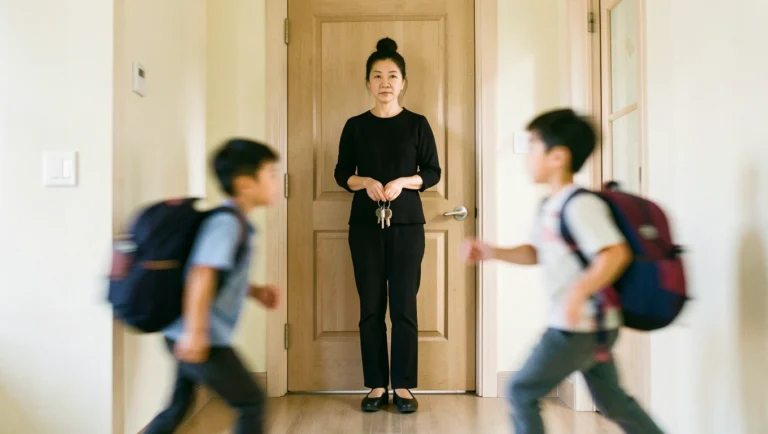
The school sent home a supply list. What it didn’t send was the guide to everything else: the pickup logistics, the why-is-she-crying-at-dinner question, and what to say when she gets in the car and says nobody played with her. The first week of kindergarten is an adjustment for the whole family, not just the kid.
I went in thinking the hard part was drop-off. Drop-off was three minutes of bravery. The other twelve hours were the actual work, and I figured most of it out the hard way.
What the First Week Really Feels Like
The school day is a long performance. She follows rules, finds the bathroom, figures out where to sit, and holds herself together for six hours. By pickup, the tank is empty.
A lot of kids do fine on day one and fall apart by Wednesday. The novelty wears off, the schedule is still new, and the tiredness compounds fast. That’s not a warning sign. It’s the transition working the way it’s supposed to.
Pediatric guidance generally suggests visiting the classroom before the first day, as unfamiliar settings can raise anxiety in young children. If you got that visit in, it probably helped. If you didn’t, most kids settle by the end of week two anyway.
The After-School Meltdown Is Part of the Transition
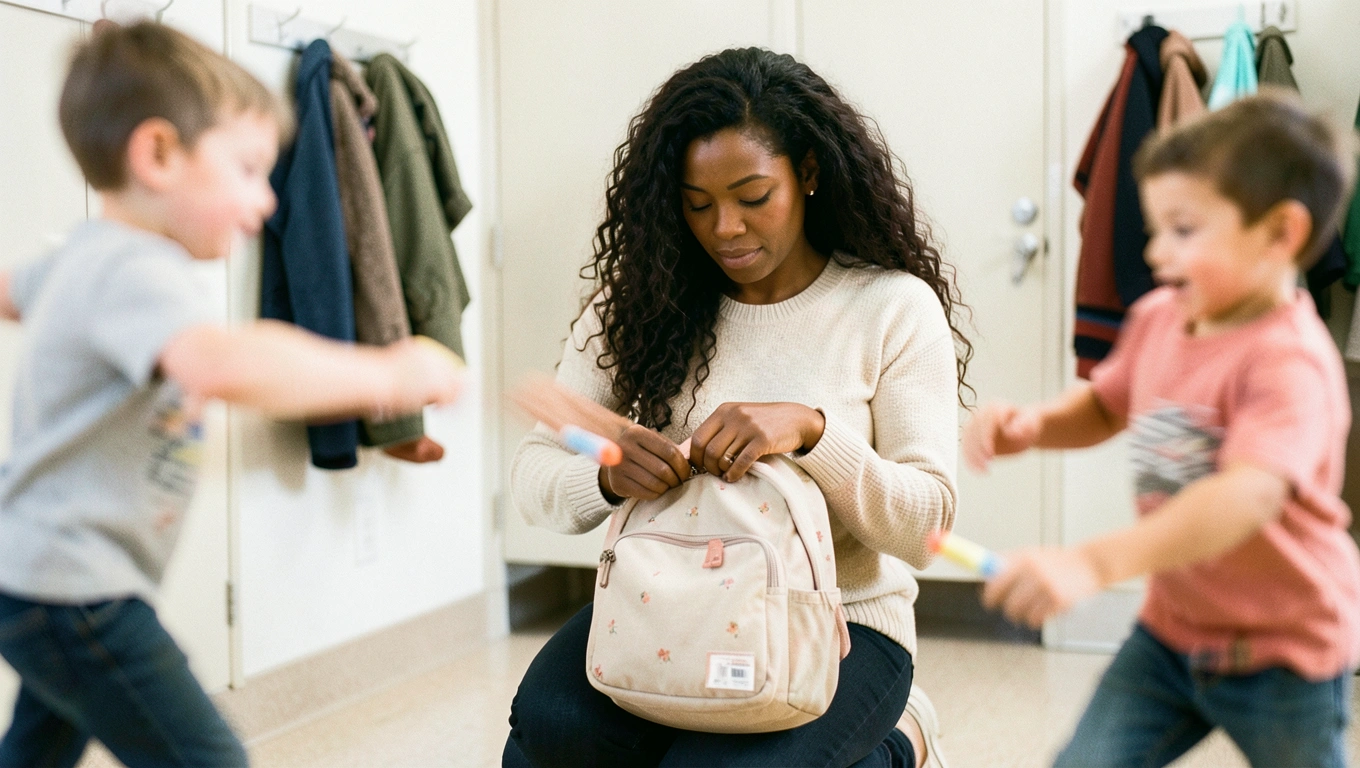
She saved it all day. You’re the safe person, so you get the leftover feelings. This isn’t a behavior problem. It’s a sign she felt secure enough at school to hold it, and secure enough at home to let it go.
I made the mistake of launching straight into questions in the driveway that first week, and by dinner we were both done. The fix isn’t a conversation. It’s a snack and fifteen minutes with no expectations.
Public-health guidance generally links consistent daily routines, including downtime after school, to better behavior and readiness during the school day. That buffer before dinner is part of the routine, not wasted time.
The Unofficial Supply List: Labels, Backup Clothes, and Fewer Morning Decisions
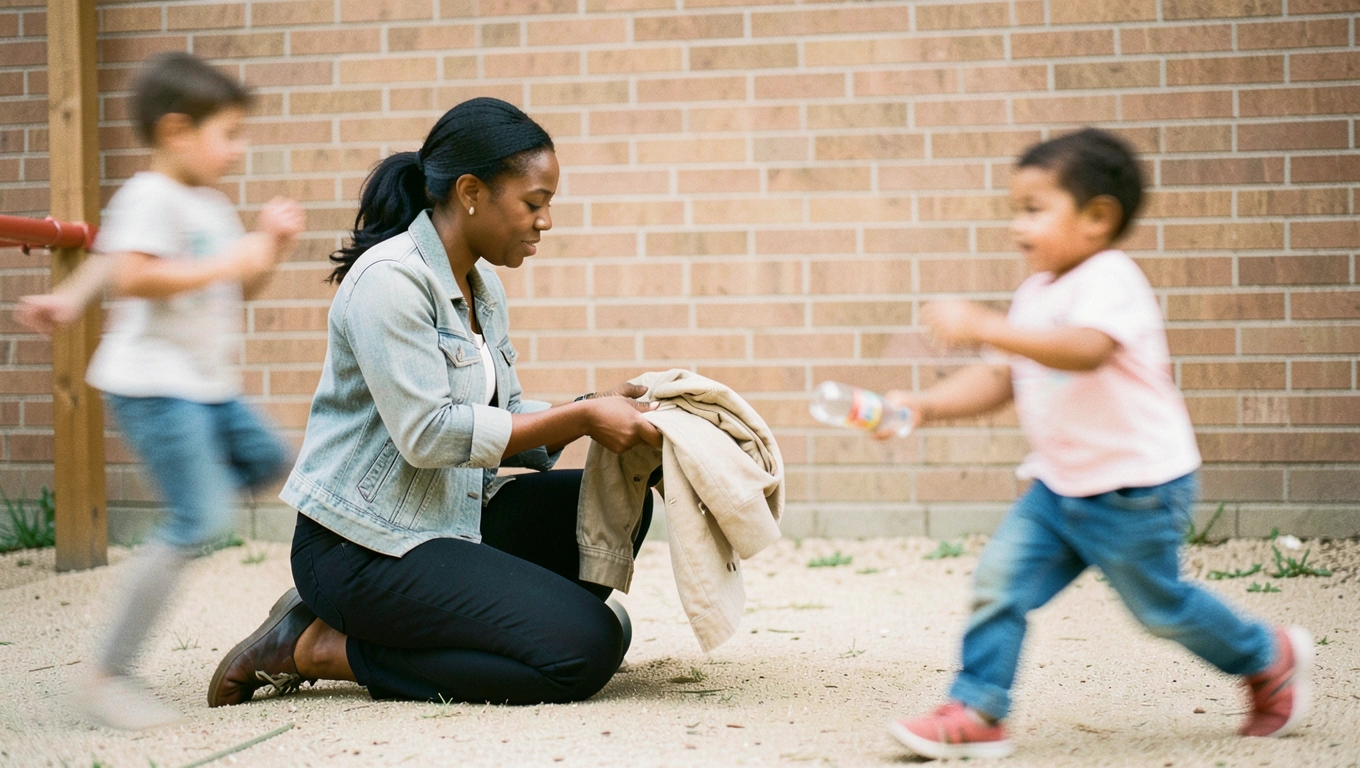
The official list covers folders and pencils. It doesn’t cover the jacket left on the playground and the water bottle that turned up in a different classroom three days later.
Label what actually walks away: jacket collar, inside the lunchbox lid, bottom of the water bottle. A strip of masking tape with her name inside each shoe buys five minutes every morning. Skip labeling individual crayons. They’re communal property by mid-September regardless.
Pack a spare outfit in the backpack. One pair of pants and a shirt, in a zip bag with her name. Schools usually have extra clothes on hand, but they’re often the wrong size and nobody wants to come home in a stranger’s shorts.
Child-health guidance generally includes organizing belongings the night before as one way to make mornings smoother. I tried it both ways. The night-before version is better.
🦸♀️ Supermom Advice
Put a small bin by the front door this week: a spare hair tie, a granola bar for the drive home, a notepad for the permission slips that show up last-minute. Set it up before you need it. The window between “running five minutes late” and “why didn’t you tell me about this yesterday” is very small in September.
Car Line, Pickup, and Other Logistics to Know Early
Car line has an unwritten operating manual: the pull-forward system, the teacher with the walkie-talkie, the exact spot where you’re supposed to stop. Nobody emails it to you.
Walk up to another parent the first week and ask. They will tell you everything. Schools vary so much on dismissal procedures that general advice doesn’t hold. What you need is the school-specific version.
A few things worth knowing before you need them
- How to submit a dismissal change, and what the cutoff time is
- What happens if you’re running late to pickup
- Whether early pickup requires a sign-out form
- Who is authorized to pick up your child and whether that list is already on file
What to Say at Pickup Instead of ‘How Was Your Day?’
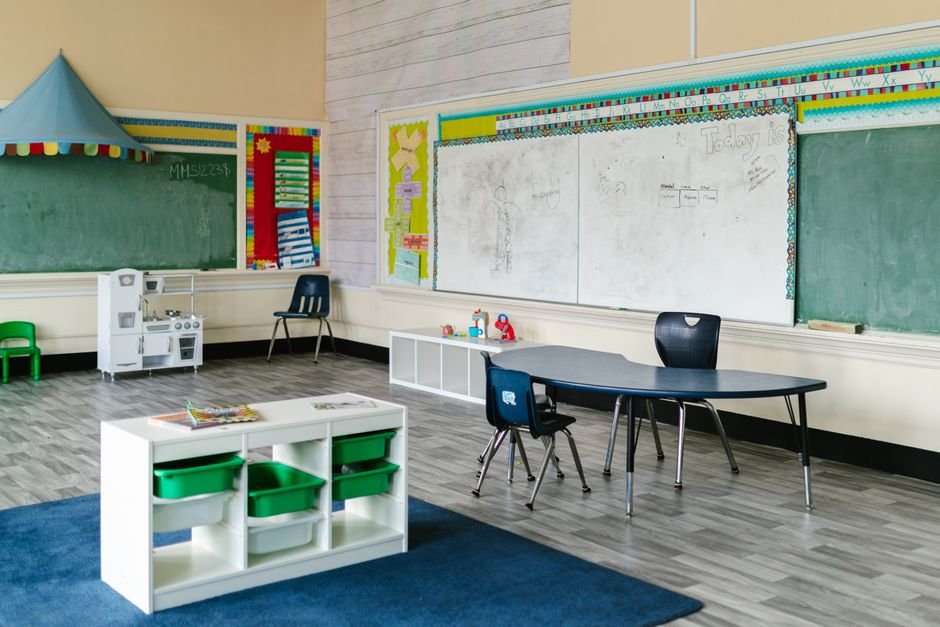
“How was your day” gets you “fine” or a shrug. It’s too big a question for a tired five-year-old who just spent hours holding herself together. Ask for one small thing instead.
Try “What made you laugh today?” or “Who did you sit next to at lunch?” One specific question is easier to answer than a full summary. Child-development guidance generally encourages letting kids share what they enjoyed and what worried them, at their own pace rather than on demand.
Put the phone away for the drive home. Research on child communication generally finds that focused attention, with distractions set aside, makes a real difference in how willing kids are to open up. Five minutes is enough.
When ‘Nobody Played With Me’ Needs a Follow-Up
One hard recess doesn’t tell you much. Five-year-olds tend to report the most recent thing as though it always happens, and a rough Tuesday can sound like a crisis. What you’re looking for is a pattern, not a single afternoon.
She says it in the car and your stomach drops. Try this: “That sounds lonely. Did that happen today, or has it been a few days?” One question, without pushing, is usually enough to find out which one you’re dealing with.
If she says it every day for two weeks, that’s worth a short email to the teacher. Keep it specific: “She’s mentioned having trouble finding someone to play with at recess. Can you let me know what you’re seeing?”
What You Can Skip and What Actually Helps
You don’t have to follow up on every worksheet, send in a themed snack, or have a plan for every hard question she might ask on the drive home. This week asks a lot of her, and a lot of you.
What actually helps: being at pickup without looking at your phone, keeping bedtime consistent because the tiredness builds all week, and knowing the car-line rules before you have to improvise. That’s the short list.
If you do those three things and nothing else, the first week of kindergarten is manageable. For both of you.
Questions moms actually ask
- Is it normal for a kindergartener to melt down after school?
- It is, and it often gets worse by mid-week when the novelty is gone and the tiredness has built up. Some kids decompress through movement rather than quiet, so a short walk outside can work as well as sitting still. The meltdown itself is usually brief once she’s had something to eat.
- What should parents label beyond the official supply list?
- Iron-on labels hold better than sticker labels on clothing after a few washes, and a laundry marker on the inside tag works fine as a quick fix. Prioritize what moves between locations: the jacket, lunchbox, library books, and water bottle. Classroom supplies on the official list are mostly shared and don’t need it.
- How can parents make car line less stressful?
- Keep a photo of your pickup placard on your phone so you have it if you lose the physical card. Learning the system in the first two days rather than the first two weeks removes most of the anxiety before it starts, so ask early even if nothing has gone wrong yet.
- When is the right time to email the teacher in the first week?
- Send early in the week rather than on Friday, when teachers are wrapping up. A short, specific note is easier to act on than a long one. If you’re waiting to see whether something resolves on its own, give it three or four days, not three weeks.
- What if drop-off is hard every morning, not just the first day?
- A few rough drop-offs in the first week are common as the routine is still new. Keep the goodbye short and consistent: a hug, a phrase you use every time, and then leave. Lingering tends to extend the distress rather than reduce it. If it continues past two or three weeks, a quick note to the teacher is a reasonable next step.